
How Hard to Love Are You?
Easy to like? Hard to reach? 24 everyday scenes, 3 minutes, one verdict.
💔 Take the Test
The Hard to Love Test
24 questions · 3 minutes · Two scores · Six types · No signup
For entertainment and self-reflection — not a clinical assessment.
What you get
The 9 Types
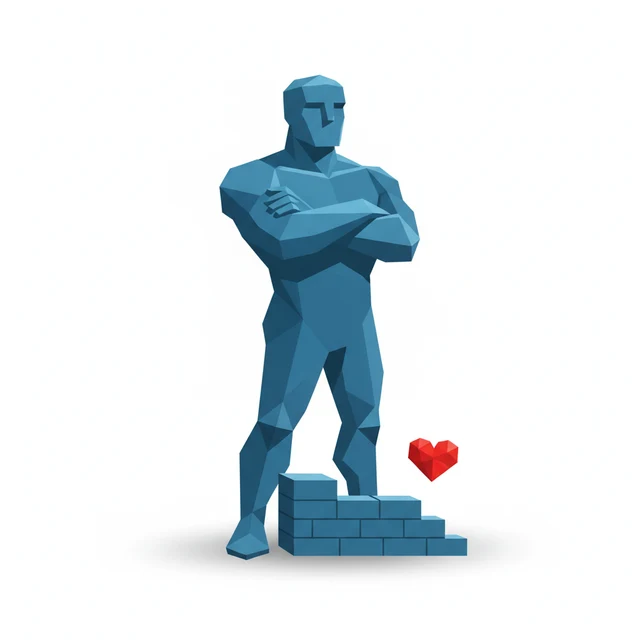 The Fortress 🏰“Warm crowd, closed gate.”
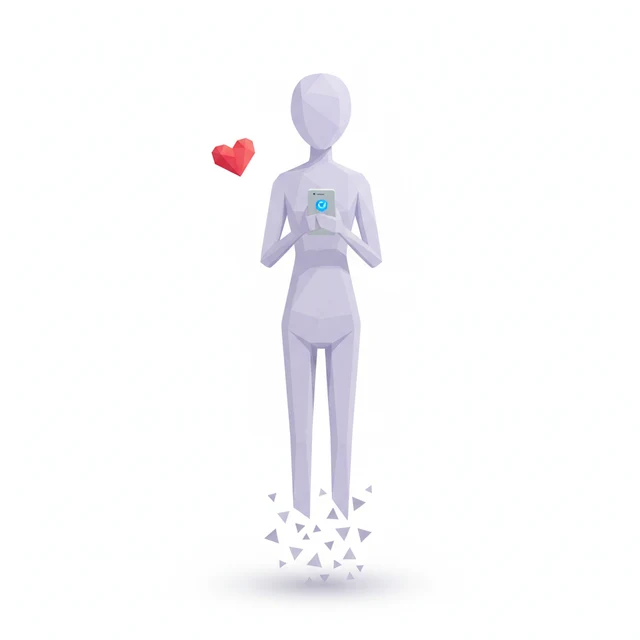 The Ghost 👻“Everyone's favorite person to text into the void.”
 The Critic 📝“Catches feelings, files complaints.”
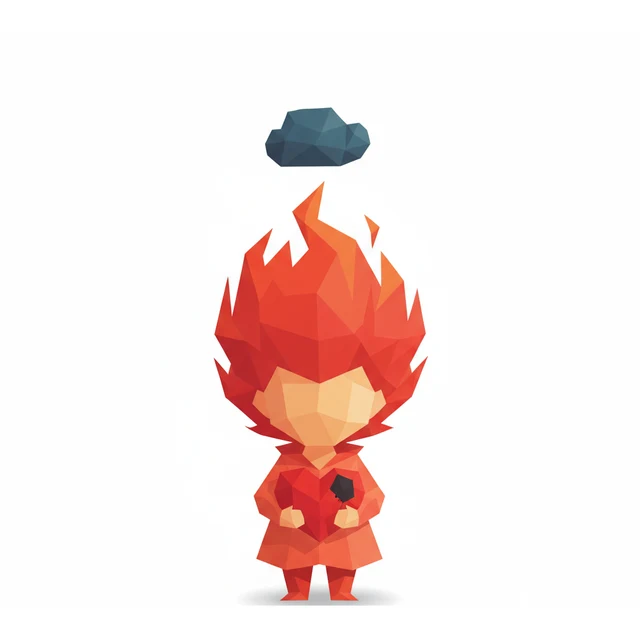 The Firestorm 🔥“From soulmates to strangers in one afternoon.”
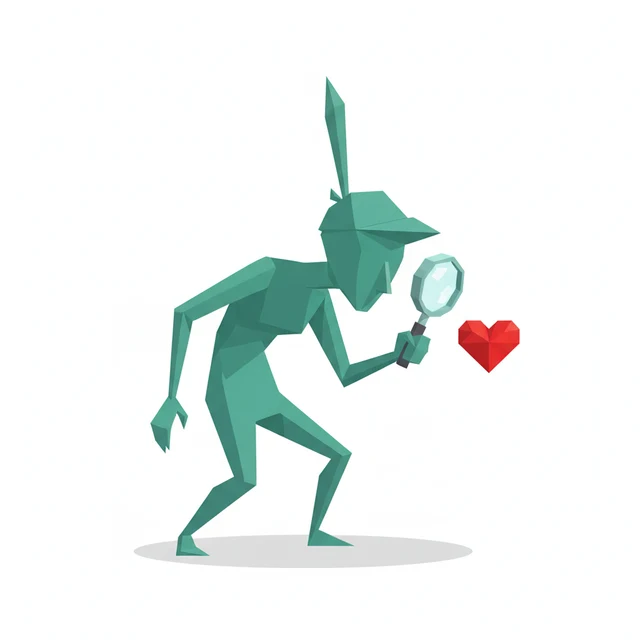 The Tester 🧪“Runs background checks on warmth.”
 The Lone Wolf 🐺“The door isn't locked. There is no door.”
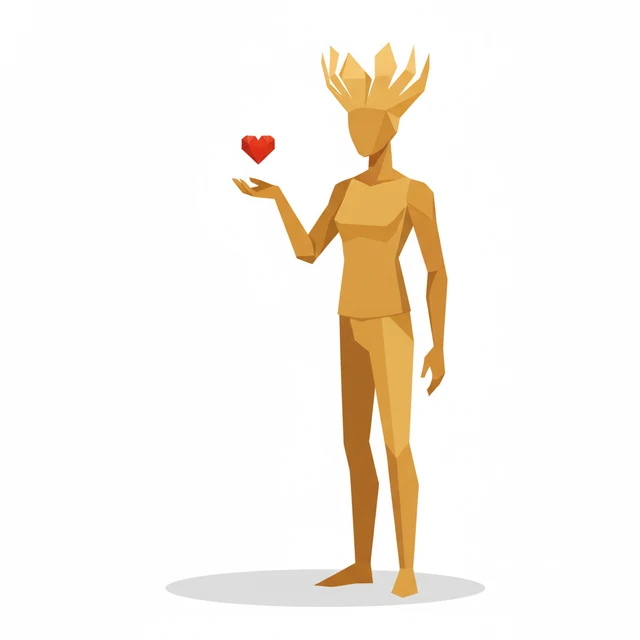 The Natural ☀️“People just like you. It's almost unfair.”
 The Slow Burner 🌱“Quiet at hello. Wide open after.”
 The Anchor 🔋“No tests, no walls, no funerals.”
🧪 What Is the Hard to Love Test?
The Hard to Love Test measures two things most quizzes confuse: how easily people come to like you when they first meet you, and how hard it is for them to actually get close once they do. Those are different skills — plenty of people are the life of the trivia team and a locked door in private, and plenty of quiet people are wide open to anyone who bothers to approach.
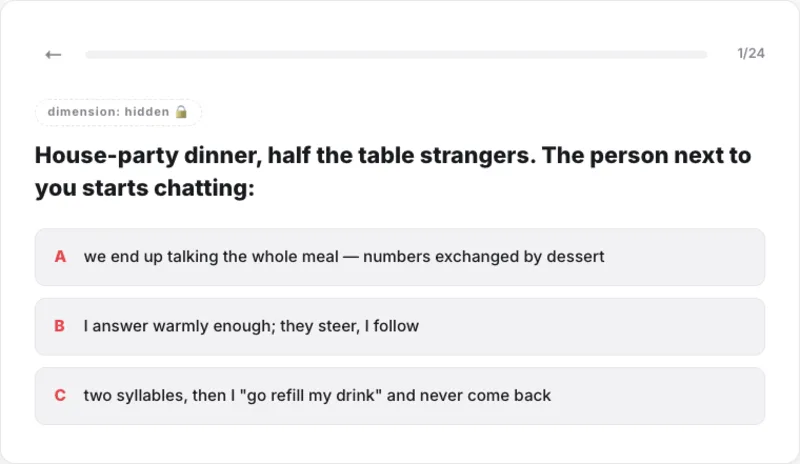
So instead of asking how you behave in a relationship, all 24 questions happen before one exists: the house party where a stranger starts chatting, the group chat that teases "you two are dating, right?", the person who texts every day, the perfect confession your brain flags as a scam.
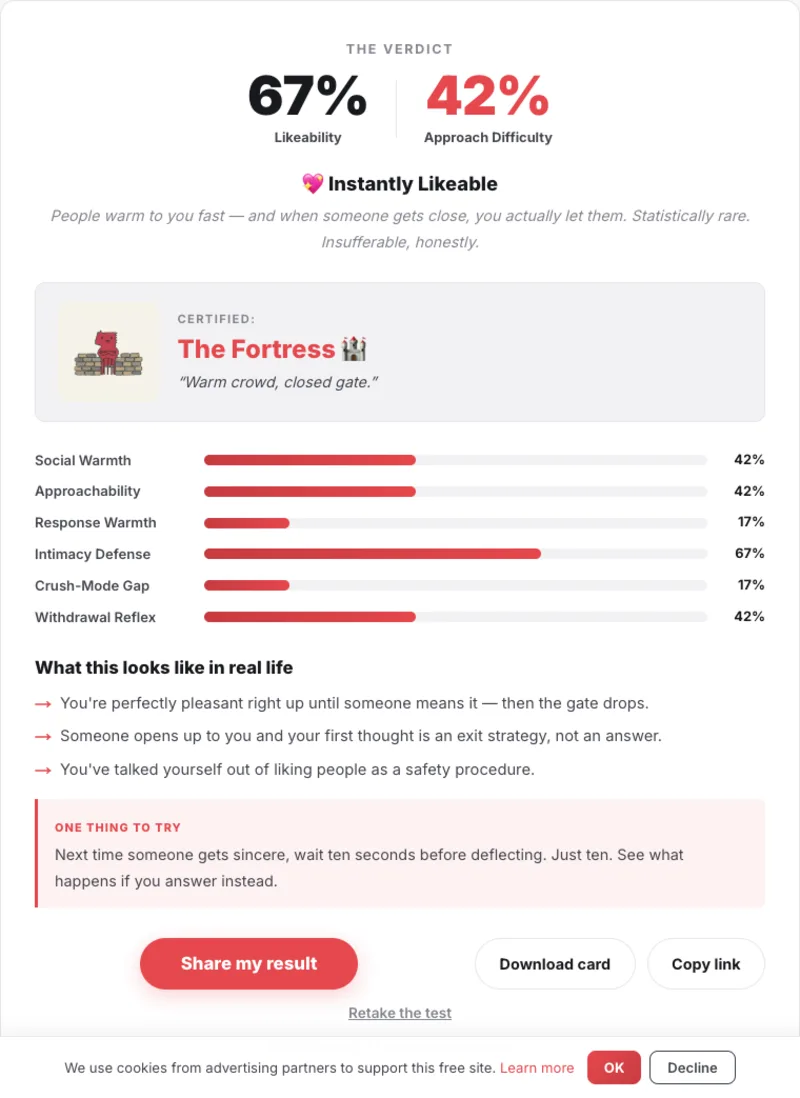
You get two scores — a Likeability Index and an Approach Difficulty — plus your quadrant and one of six types: The Fortress, The Ghost, The Critic, The Firestorm, The Tester, or The Lone Wolf. Fair warning: the funniest result to receive is Tester, because doubting the result is exactly what a Tester would do.
💯 Two Scores, Not One
Half the questions measure the first meeting: is talking to you pleasant, do you leave a door open, do you respond when someone initiates? That becomes your Likeability Index. This is not an extroversion contest — quiet-but-warm answers score just as well as loud ones. What costs points is the freeze-out: seeing the message and not feeling like replying, the "next time for sure" that never comes.
The other half measures what happens after someone starts to genuinely like you: do you doubt it, dodge it, go cold on the person you actually like, test them with deliberate silence, or cut them off the moment their warmth dips? That becomes your Approach Difficulty — the real hard-to-love number.
The gap between your two scores is usually the most accurate thing about the result. High likeability with high difficulty is the classic heartbreaker profile: easy to fall for, brutal to reach.
🗺️ The Four Quadrants
Instantly Likeable 💖 — people warm to you fast, and you let them in. High Demand, High Walls 🧗 — people fall easily and then hit the wall; the closer they get, the more distance you make. Slow Burn 🕯️ — you don't dazzle the room, but your door is genuinely unlocked for whoever approaches. Closed Island 🏝️ — hard to meet, harder to reach, and some part of you likes it that way.
Your quadrant is the headline; your type is the mechanism. The six types describe HOW you make closeness difficult: the Fortress drops the gate when things get sincere, the Ghost stops rendering, the Critic drafts flaw lists, the Firestorm holds funerals over slow replies, the Tester runs secret loyalty exams, and the Lone Wolf never built an entrance in the first place.
💔 What 'Hard to Love' Actually Means Here
Being hard to love, in this test, is not about your worth and not about your relationship skills. It's the amount of resistance a person meets on the way from "just met you" to "actually knows you": unanswered warmth, tests they didn't sign up for, walls that appear exactly when they start meaning it.
Most of that resistance is old protection — habits that made sense once and now charge rent to people who never hurt you. Which is why every result ships with three specific behaviors you'll recognize immediately and one concrete thing to try this week. Not therapy. One door, slightly open.
🔬 Is It Accurate?
It's 24 honest answers about situations you've actually been in — which makes it more honest than a self-rating and less official than a diagnosis. This is an entertainment quiz built for self-recognition, not a clinical instrument.
Our unscientific observation: people who score Closed Island usually already know, people who score Instantly Likeable send it to everyone, and people who score High Demand High Walls screenshot it, say "this is so wrong", and then think about it for three days. If your result stings a little, it's probably at least half right.
Keep reading
How the Hard to Love Test Works · The 9 Types · Am I Hard to Love?
Hard to Love Test — FAQ
► What is the Hard to Love Test?
► How long does it take?
► What results do I get?
► Is it scientifically valid?
► Is it free? Do I need to sign up?
► Does being quiet make me score worse?